A good pair of trousers does more work than anything else in a woman's wardrobe. Blazers get noticed. Dresses get compliments. Trousers are what actually get worn, week after week, from the first cold morning in September to the last one in February.
They go under a long coat. They tuck into boots. They get through an office day and a school run without anyone thinking about them, which is the point.
So this is a working guide for buyers: the cuts worth stocking, how to work out what fits, which fabrics hold up once the weather turns, and the construction details that decide whether a pair sells again next season.
Section 01
Once the temperature drops, hemlines go up and the layers come out. Trousers solve the problem every autumn brings: staying warm without looking like you stopped trying.
A skirt needs the right boots and the right tights before it works. Trousers just need to fit. You can also wear the same pair twice in a week without anyone noticing, which is not true of a dress.
That is why two or three good pairs beat five impulse buys. For a buyer this is the whole problem in one line: the cuts you stock have to suit a range of shapes, and the weights have to suit the calendar.
Section 02
Wide legs are still the silhouette of the season. They skim the hip and fall straight from the thigh, so the line runs unbroken from waist to hem, and they cover the parts of a winter outfit that need covering: thick socks, thermal layers, the tights that never quite match.
Look for a high waist in a wool blend or a heavy cotton twill, then keep the top fitted. If the volume sits in the trousers, it should not also sit in the knit.
One caution from the buying side: a market that has lived in skinny jeans for five years will not switch in a single season. Put one wide leg into the range next to what already sells, and see what happens before you replace the wall.
This is the pair you reach for when you need to look like you mean business. A high-waisted Slim Fit Work Trousers with a clean centre crease carries an office day, and it takes a knit and loafers on the weekend without complaint.
Two things matter more than the label: the cut should skim rather than cling, and the waistband should hold itself up without a belt. If someone needs a belt to keep the waist in place, the pattern is wrong, not the person wearing it.
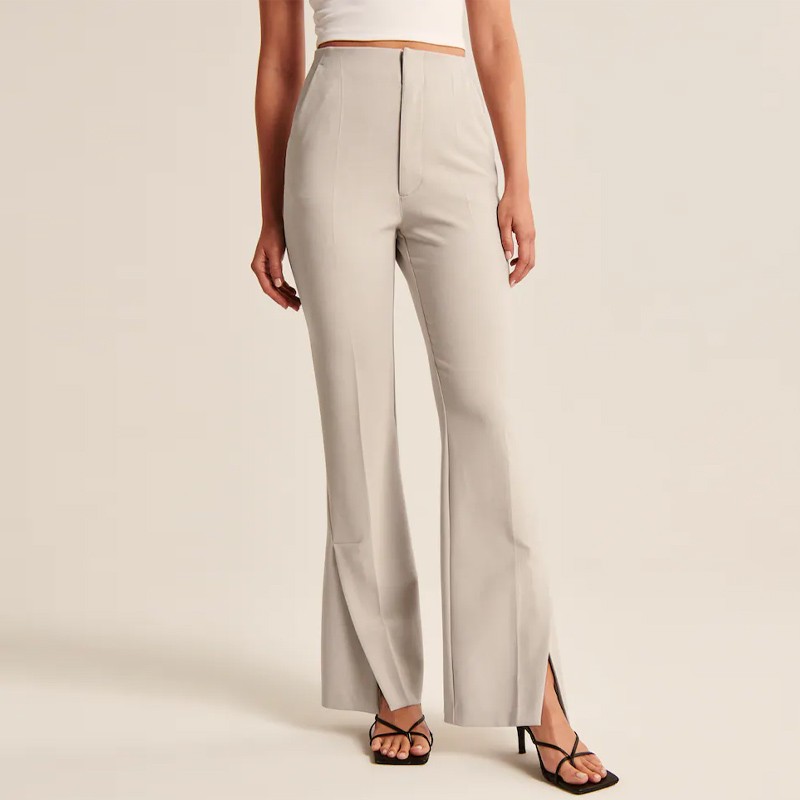
Our Slim Fit Work Trousers — high waist, clean crease, office ready
Cargo has moved out of the outdoors and into everyday wear. Black Cargo Pants, or khaki and tan if you prefer, add an easy edge to a plain outfit. Keep the rest simple, a tucked-in top and a structured coat, and the extra pockets read as deliberate rather than accidental.
Cargo is also the silhouette that punishes over-design. Buckles, straps and six pockets at once look like a costume. Two pockets and a clean leg are enough.
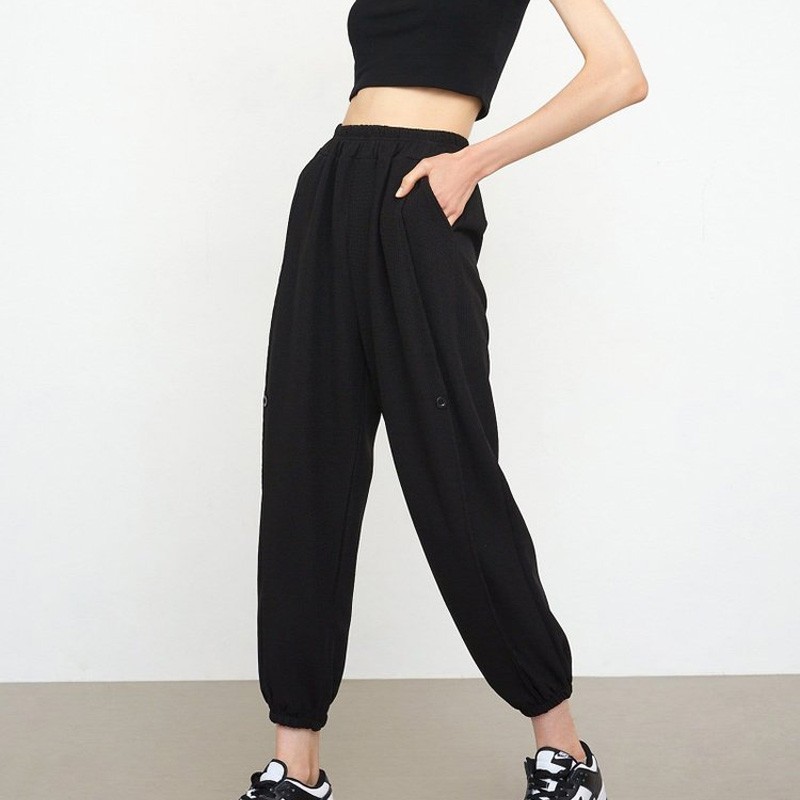
Our Black Cargo Pants — a loose utility shape that still hangs clean
Slacks cut like suiting do the most for your proportions: high waist, straight leg, one clean line from waist to floor. A pair of Straight Pants For Women sits under a blazer without any argument, because both pieces were cut by the same logic.
They are also the pair that gets through a season without a markdown, which is more than most trends can say.
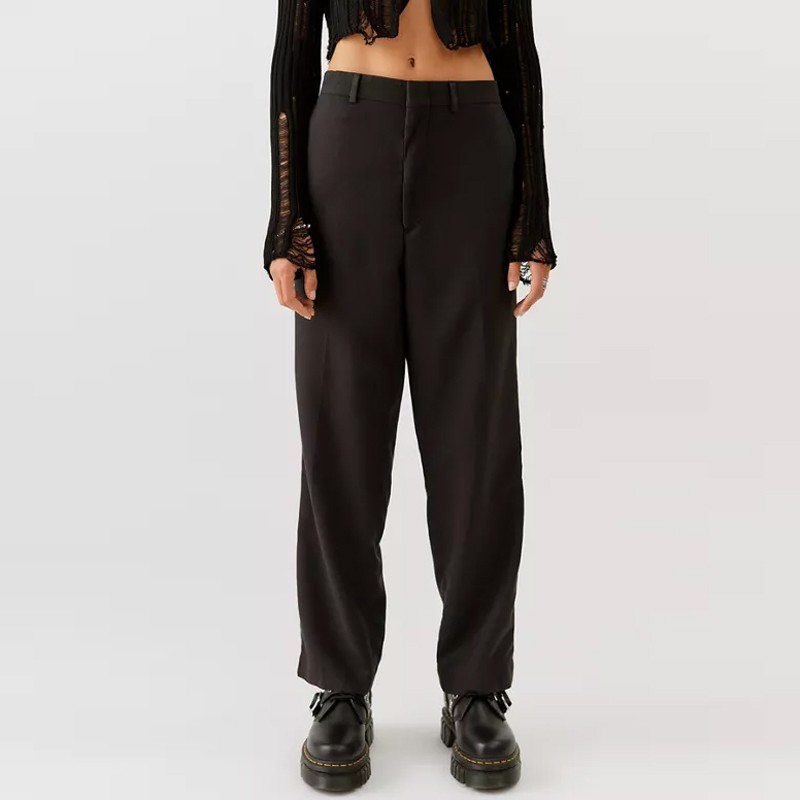
Our Straight Pants For Women — a straight tailored line for suiting looks
Some days nothing structured will do. Wide Leg Lounge Pants and knit trousers in ponte or a soft rib give you comfort that still looks finished. They are also the pair that travels best: a long flight, then a client meeting, with no change of clothes in between.
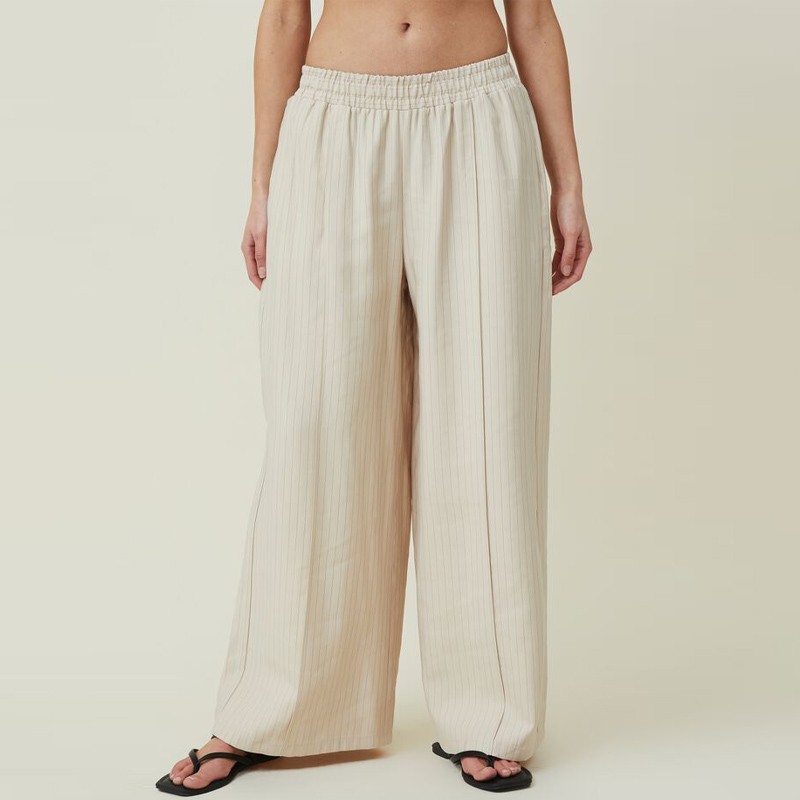
Our Wide Leg Lounge Pants — loose, easy, comfortable all season
Section 03
Start with your shape, then pick the cut. Most fitting complaints come down to the wrong rise sitting on the wrong hip, and no amount of styling fixes a rise that is two centimetres out.
An hourglass figure does best in a mid to high rise with a defined waistband and a straight leg; keep the top fitted or tucked so the waist stays visible. Pear shapes should take the volume downwards, not upwards: a dark, structured straight or wide leg with little detail at the hip, finished with a jacket long enough to end below it. A rectangle can use volume as a tool, so a wide leg or a pleated front with a belt at the waist gives the shape something to follow. Inverted triangles should go the other way and keep cargo pockets off the hip, since a straight or slightly flared leg under a soft, draped top evens out the shoulders.
Petite frames want a high rise and either a cropped ankle or a clean break at the hem, and one colour from the top down does more for height than any heel. Plus sizes are served best by a high rise with a little stretch, a wide leg and a flat-front waistband, with a structured blazer or a long cardigan over the top to finish the line.
None of this is a rule, and two women with the same measurements will often prefer different cuts. It is a starting point for a fitting room, not a label to hand someone on the shop floor.
Section 04
Fabric decides how a pair behaves. Two trousers can look identical on the hanger and completely different after a week of wear. A wool blend at roughly 260 to 320 gsm holds a crease through a winter; drop below that and it belongs to early autumn only. That is the cloth behind tailored slacks and wide legs, because it keeps its shape where cheaper fabric sags.
Cotton twill is the workhorse underneath cargo and utility styles. It dyes well, washes without fuss and holds a structured line, though it creases and will not drape the way wool does. Corduroy brings texture to high-waisted slacks and casual dressing, and it photographs better than plain cotton, which matters more every year.
Ponte and ribbed knits belong to lounge and travel trousers: enough stretch to sit through a long flight, still tidy enough for a meeting on the other side. Velvet is the exception in the range. It exists for evening and party trousers and should stay a small part of the buy, because it is the hardest to sell twice.
Gabardine, tightly woven and hardwearing, is what most work and office trousers are cut from. It resists creasing and drapes sharply, which is why it has held the office trouser market for decades without much competition.
Section 05
Office. Tailored slacks, a tucked-in blouse, a structured blazer, leather loafers. Stay inside one colour family, camel or cream or bone, and the outfit looks considered rather than fussy.
Weekend. Black cargo pants, a ribbed knit, a cropped jacket, clean sneakers, a crossbody bag. This is the one that gets repeated most, usually on a Sunday.
Evening. Wide-leg trousers in velvet or a wool blend, a satin blouse, heeled boots. Put a long coat over the top and it holds up from dinner until late.
Notice that none of them depend on a particular pair of shoes. That is usually what makes an outfit repeatable, and repeat business is the only kind that matters to a range.
Section 06
Before a large order, ask for a swatch, wash it once, and look at the seam allowance at the crotch. Most returns start somewhere in those three steps.
Trousers are the quiet purchase in an autumn wardrobe. Nobody notices them the way they notice a new coat, but get the cut and the weight right and the rest of the outfit is easier to put together in the morning.
Pick two or three cuts you like and stop there. That is enough to get from September to February without standing in front of the wardrobe at eight in the morning, wondering what to wear.
If you are deciding what to stock rather than what to wear, start with the pair your customers already buy, then add one new silhouette beside it. Ranges built that way tend to survive the season.
Explore our full range of Trousers For Women to find the cuts that suit your line and your customers.
VIEW TROUSERS FOR WOMENEmail : cassiebirthdayparty@gmail.com